
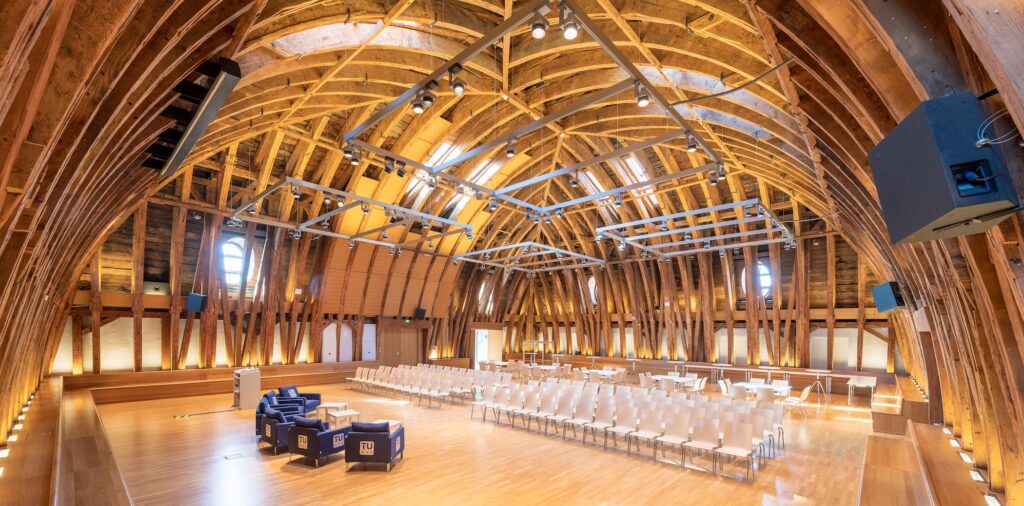
3rd FAIR Digital Objects Conference
Panels
Motivation Panel
Convener/Chair: Laura Biven
Panel Summary
This panel will explore the demonstrated and potential value propositions for FDOs in a variety of fields and sectors. With our panel of expert leaders at the forefront of FDO implementation and data and computing ecosystems, we will also discuss lessons learned in the adoption of FDOs and open questions for further development. We will explore questions such as:
- What challenges do FODs help solve? What are the main advantages of FDOs over other technologies or solutions?
- How can FDOs help advance technologies like AI?
- What are the limitations of FDOs?
- How does the future of FDOs depend on available cloud and data center resources?
- What is needed for broader adoption of FDOs?
Panellists
- Dimitris Koureas, Executive Director, DiSSCO and Managing Director for Digital Strategy and Innovation, Naturalis Biodiversity Center. https://www.linkedin.com/in/dkoureas/
- Karsten Peters, Developer at the German Climate Computer Center, responsible for workflows solutions and automation of data processing https://www.dkrz.de/de/about/mitarbeiter/dr-karsten-peters
- Joy Owango, Founding Director of the Training Centre in Communication (TCC Africa)and Leader of the African PID Alliance https://africapidalliance.org/
- Sven Bingert, Cochair of the FDO Forum, Deputy Director of eScience Team, GWDG
Interoperability Panel
Convener/Chair: Bob Hanisch, Campostella Research and Consulting, LLC
Panel Summary
The panel for the Interoperability discussion at the FDO Conference includes representatives from academia, government, and the private sector. The idea is to address interoperability from these different perspectives and at a rather high level:
- What makes it difficult?
- What are the benefits?
- Are there examples of success, particularly interdisciplinary?
- Are there different approaches necessary for academia, government, and private industry?
- Do you see FDOs as a solution to achieving interoperability? If not, why not? If so, are there plans for adoption within your community?
Panellists
- Dr. Vivien Bonnazi, Chief Data Officer, Inari
- Dr. Carole Goble, Professor of Computer Science, University of Manchester
- Mikiko Tanifuji, Center Director, Senior Researcher for Cyber Science Infrastructure, NII
- Dr. George Rodriguez, Computational Chief Scientist, ExxonMobil Technology and Engineering
Security & Data Space Panel
Conveners: Christophe Blanchi, Peter Wittenburg
Panel Summary
On the first day we will have a more generic discussion of security dimensions that are related to trust issues, dataspace architectures are being presented to meet the requirements and the FDO concept is being introduced to act as a generic bridge. In the panel we want to specifically address security issues related with FDOs and with architectures including rights interpretations and trust frameworks such as Dataspace technologies, active FDOs and “active” Internet of Things units.
The session will be opened by a broad view on trust challenges taking into account what has been said at day 1. It will be followed by an introduction of the security features and challenges of basic FDOs.
Then we intend to address the following questions:
- Which security aspects can be improved by using FDOs – without and with
included rights specifications and operations? Someone first will explain
what
- basic security mechanisms of FDOs are and indicate differences between implementations
- How bundled operations can help in encapsulating and securing rights information
- An application of security relevant mechanisms should be given.
- How security aspects change when including operations and when extending to dataspaces
Panellists/Chair
- Chair: Stian Soiland-Reyes, U Manchester
- Christophe Blanchi, DONA Foundation, FDOF
- Xihui Zhen, Content Digital Innovation Technology Co.,Ltd., China
- Dominik Rohrmus, Factory X
- Timm Fitschen, Indiscale
- Peter Koen, Microsoft